
2025 Recession Indicators
Author
Richard Kemner
Date Published

2025 Recession Indicators
Reading the Economic Tea Leaves
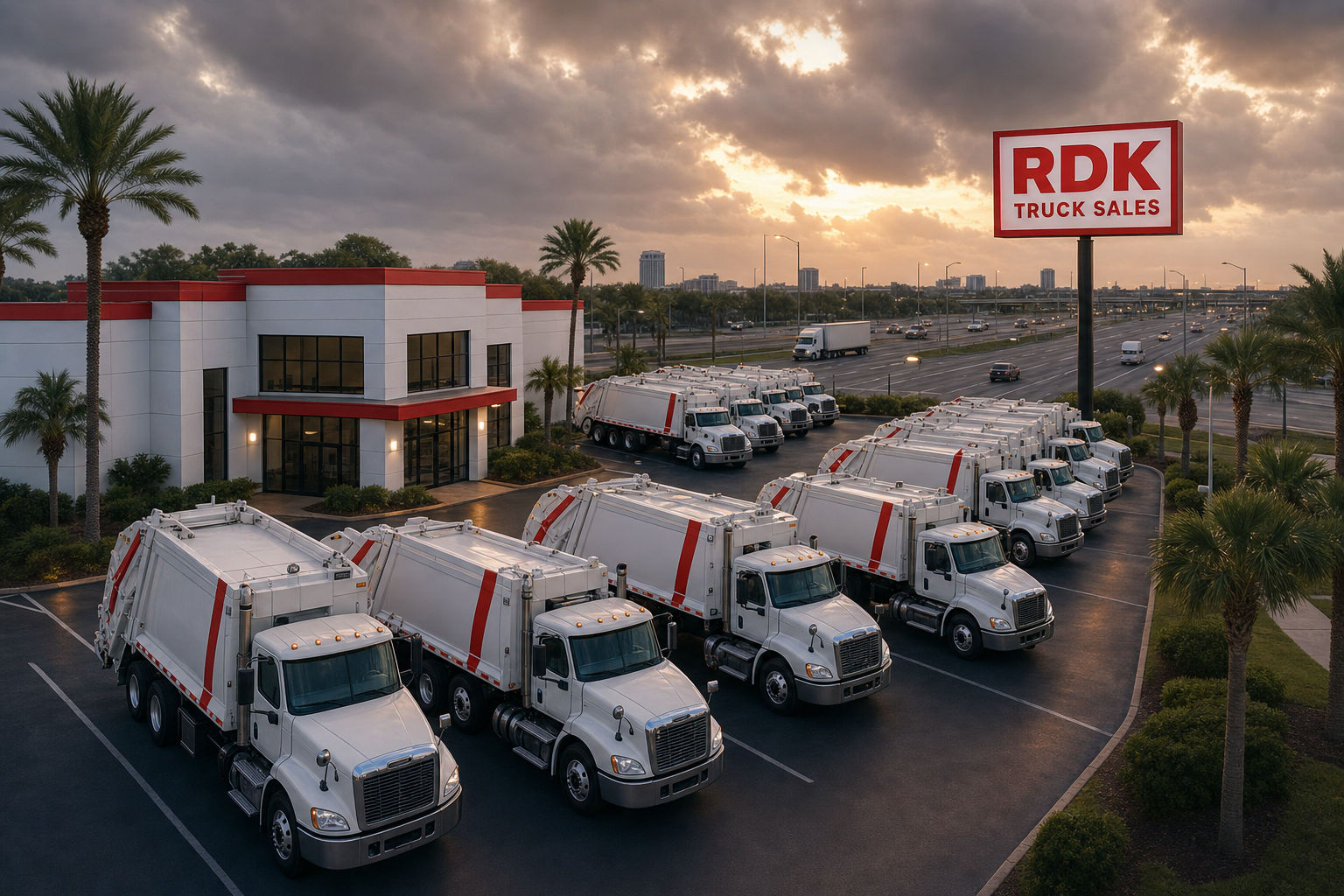
Seven 2025 recession indicators are telling the exact same story. The question isn’t whether we are facing economic turbulence. The real question is what we do about it.
I have spent 42 years in the refuse equipment industry. Back in 1983, I rode garbage routes at 5:00 AM just to earn meetings with decision-makers. Over those decades, I’ve learned to pay attention to economic signals that rarely make front-page news. The data points I’m tracking right now paint a consistent, clear picture.
This analysis isn't about doom and gloom. It’s about facing reality. Clear facts are what help us make smart, profitable decisions.
Here are seven key economic indicators shaping the 2025 commercial vehicle landscape and what they mean for your business.
1. The Freight Recession
If you want to know where the broader economy is heading, follow the trucks. National freight tonnage is down roughly 7% year over year. More concerning is the duration. We are currently navigating the longest freight recession in modern history, stretching back to April 2022. That represents over three consecutive years of declining freight volumes.
Q4 2024 shipments fell 4.7%, marking the tenth consecutive quarterly contraction (source). Spot market loads are down approximately 30% compared to last year (source). Carrier bankruptcies have surged by 30% (source), leaving more than 17,500 trucking companies surrendering their operating authority.
Driver net profit margins have collapsed from roughly $1.00 per mile down to just 3 cents.
When trucks aren’t moving, goods aren’t flowing. When goods aren’t flowing, the macro economy is contracting.
2. The Class 8 Equipment Collapse
This indicator hits right in our backyard. September 2025 Class 8 retail sales plunged 25.6% to just 16,228 units. At the same time, net orders hit a 16-year low in June 2025. That was the weakest ordering activity recorded since 2009.
New truck inventories across dealer lots are approaching all-time highs. Combined net orders for September and October lagged 32% below year-ago levels. Publicly traded fleets ended Q1 with their weakest net income margins since 2010.
October 2025 Sales by Manufacturer (Source):
- Freightliner: 4,738 units (down 39.7% from October 2024)
- Volvo: Year-to-date sales lagging 24.1% behind 2024 pace
- International: Down 33.0% from October 2024
- Peterbilt: Down 27.9% from October 2024
- Kenworth: Down 25.8% from October 2024
- Mack: Year-to-date sales up 12.2% (the single bright spot)
Used truck prices fell 3.5% month-over-month in October and are down 8% year-over-year. Meanwhile, import tariffs are adding an estimated $9,000 to $10,000 per Class 8 vehicle.
When fleet operators stop purchasing $150,000 commercial trucks, they send a clear signal. They simply do not see immediate growth ahead.

3. Corporate Bellwethers Cut Headcount
When the nation's largest corporate employers trim headcount, industry leaders take notice.
Amazon eliminated approximately 14,000 corporate positions (source). Walmart cut 1,500 jobs and froze total headcount at 2.1 million employees (source). These are not struggling companies. They are among the most sophisticated demand forecasters in the world.
Over the first ten months of 2025, employers announced 1.1 million layoffs. That is a 44% surge over the same period in 2024, and the highest level recorded since 2020. At the same time, both retail titans are accelerating automation. Over 50% of e-commerce operations and 60% of retail stores are shifting to automated freight systems.
These eliminated positions represent a permanent structural shift rather than a temporary cyclical adjustment.
4. The Garbage Index
This is my direct sector, and refuse data never lies.
Municipalities across the country are reporting steady declines in waste tonnages. A municipal study in Cedar Rapids confirmed a direct correlation between commercial trash tonnage and real-time economic activity. Many analysts predicted commercial waste would rebound sharply post-pandemic, but landfill operators continue to report reduced overall tonnage.
The conclusion is simple. Consumers are purchasing fewer physical goods as household budgets tighten.

5. The Housing Inventory Overhang
Unsold, completed single-family homes climbed to 121,000 units in July 2025. This is the highest level recorded since July 2009 during the Great Recession. The housing market has not seen this volume of unsold builder inventory in 16 years.
Overall residential real estate inventory has returned to 2019 pre-pandemic levels. There are 33% more homes active on the market today than a year ago. New home sales fell 8.1% year-over-year in July, marking eight consecutive quarters of year-over-year price softening.
Lennar, one of the nation’s largest homebuilders, is currently offering buyer incentives averaging 13% of the total purchase price. That is up from 1.5% in Q2 2022. On a $400,000 home, that equates to $52,000 in price concessions.
6. Shifts in Labor Dynamics
For the first time in over 50 years, the United States is experiencing negative net migration (source). More individuals are leaving the country than arriving.
At the same time, construction wages have escalated 8% to 9% as localized labor shortages intensify (source). Across agriculture, hospitality, and heavy construction, labor costs are rising while total output cools. Fewer overall workers ultimately translates to fewer consumers, renters, vehicle buyers, and reduced economic velocity.
7. The Healthcare Cost Squeeze
ACA marketplace premiums are increasing by an average of 26% for 2026 (source). Employer-sponsored healthcare costs rose 6% to 7% this past year. Additionally, high-demand GLP-1 medications, such as Ozempic and Wegovy, are driving quarterly pharmacy expense surges of 25% to 30% for corporate plans.
For small and mid-sized business owners, healthcare overhead is becoming an existential threat. Every dollar absorbed by skyrocketing health premiums is a dollar unavailable for equipment replacement, wage increases, or capital expansion.
Recession or Correction?
This brings us to the core question. Are we entering a severe recession, or are we witnessing a long-overdue market correction following years of unprecedented government spending?
The answer is both. What commercial fleets are experiencing today is the hangover from years of near-zero interest rates, massive government stimulus, and artificial liquidity. That capital inflated asset prices and drove unsustainable consumption patterns. Now, the bill is coming due.
Compounding this monetary shift is deep uncertainty. Fleet managers face changing regulatory mandates, shifting trade policies, fluctuating tariffs, and volatile geopolitical conditions across Europe, Asia, and the Middle East. Reliable supply chains now require constant risk management.
When business owners feel cautious, they delay capital expenditures, hold off on fleet expansions, and preserve cash reserves. That defensive posture is reflected across every metric above. Freight moves slower, trucks stay on lots longer, and waste streams lighten.
Where the Opportunity Lies
Over my four decades in business, I've learned that elite companies don't wait for market conditions to improve. They capitalize on the opportunities that market shifts create.
This environment will expose operational weaknesses in competitors who grew comfortable during easy years. Operators who allowed service standards to slip or neglected customer relationships will make costly mistakes.
How smart fleets win in this environment:
- Step In When Competitors Falter: Deliver exceptional service and reliability when other operators cut corners or delay service.
- Strengthen Customer Relationships: Position your team as an essential operational partner rather than just another vendor sending invoices.
- Analyze Equipment Options Objectively: Help your management team examine real total-cost-of-ownership data to optimize replacement timing.
- Maintain Financial Discipline: Keep cash reserves healthy while strategically acquiring value-priced equipment to stay ahead of future demand.
Markets always cycle back. When this market rebounds, the businesses that maintained discipline, adapted quickly, and supported their client base will emerge in a position of market dominance.

RDK Truck Sales · Tampa, Florida
The Bottom LineThis is not a time for panic. It is a time for focus, discipline, and operational execution. Significant opportunity exists for operators willing to adapt and act decisively.
These seven economic indicators aren't a crystal ball. They are practical data points to help guide your strategic fleet planning. For a deeper look into structuring your fleet assets in today's economic climate, read our comprehensive guide on leasing versus buying refuse equipment.
Evaluating whether to lease or purchase trucks in this market? Let’s analyze your fleet numbers together.

RDK Truck Sales breaks down the 2026 Supreme Court tariff ruling in plain language: what changed, what didn't, and why Tampa trucking will be fine.

Rising fuel costs, driver shortages, tighter municipal budgets — every refuse hauler feels it. Here's how the haulers who come out ahead use tough stretches to grow instead of just survive.

Weighing lease vs. purchase for your refuse trucks? See how RDK's 3-year lease eliminates warranty disputes and unpredictable repair costs.