
Extreme Cold Weather Fleet Maintenance
Author
Richard Kemner
Date Published

Extreme Cold Weather Fleet Maintenance
Brutal Cold Incoming: How to Protect Your Refuse Fleet During Arctic Snaps
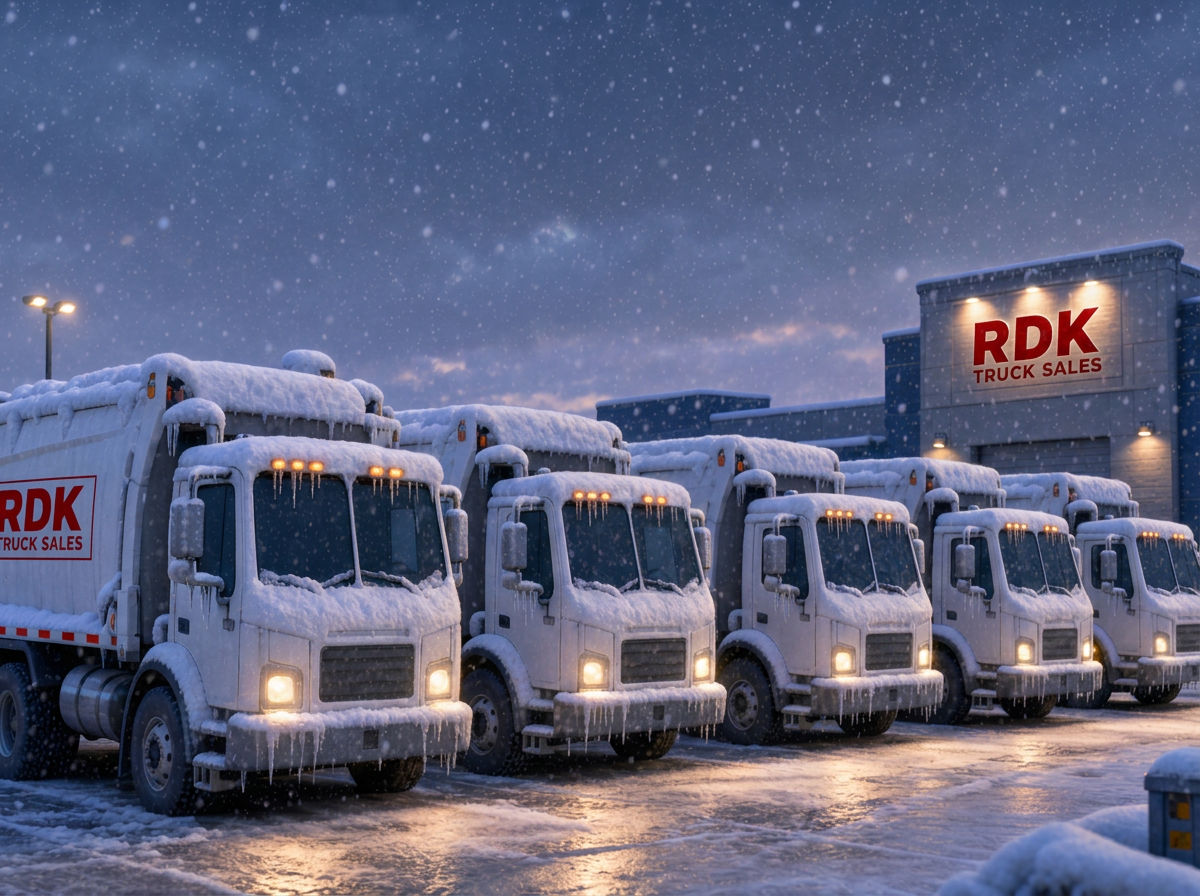
When extreme cold blasts across the Midwest, Northeast, or Mid-Atlantic, fleet managers face a steep operational battle. You already know what’s coming. We’re looking at temperatures dropping well below freezing—some areas dipping below zero—with ice storms, snow, and freezing sleet making things even more challenging.
Here’s what you need to know to keep your fleet moving.
The DEF Problem: Your Biggest Cold Weather Enemy
DEF remains one of the most vulnerable components on modern heavy-duty trucks. Because DEF is roughly 67.5% deionized water, it freezes at 12°F (-11°C). Standard winter nights across much of the country easily cross this threshold.
- Your truck goes into derate mode (reduced power).
- In severe cases, the engine won’t start at all.
- The DEF tank and lines can crack if completely frozen.
- Keep trucks in heated buildings overnight whenever possible.
- If outdoor parking is your only option, use DEF tank heaters.
- Run the engine periodically to keep the system warm.
- Never add additives to DEF—it voids warranties and damages the system.
- Keep DEF tanks at least half full; less fluid freezes faster.

DPF and Aftertreatment Systems
Modern emissions systems depend on extreme heat to function correctly—heat that cold ambient air rapidly siphons away. During severe cold spells, Diesel Particulate Filters (DPF) and Selective Catalytic Reduction (SCR) systems struggle to maintain operating temperatures, leading to prolonged or incomplete regenerations.
- Extended regen times tying up trucks.
- Warning lights from cold sensors giving false readings.
- Blocked regens if trucks are doing short runs and shutting down before completing cycles.
- Let trucks fully complete regen cycles before shutting down—even if it means idling an extra 20 minutes.
- Don’t ignore warning lights; cold weather amplifies small issues into big problems.
- If a truck has been sitting in extreme cold, let it idle and warm up before hitting the road.
Hydraulic Systems: Your Packer’s Worst Nightmare
This is where I see crews get into real trouble. In refuse operations, your hydraulic system bears the brunt of physical work. Extreme cold causes hydraulic fluid to thicken dramatically, placing immense stress on pumps, valves, and cylinder seals.
- Slow or jerky packer operation.
- Cylinders that won’t fully extend or retract.
- Increased strain on pumps (leading to premature failure).
- Seals that crack and start leaking.
- Warm up the hydraulic system before running full cycles—operate the packer slowly through several partial cycles first.
- Check hydraulic fluid levels; cold weather reveals low fluid faster.
- Inspect all hoses and fittings for cracks before heading out.
- Consider switching to a lower-viscosity hydraulic fluid for winter operations if you haven’t already.

Packing Frozen Trash: Physics Works Against You
Here’s something newer operators don’t always think about: frozen garbage doesn’t compact like regular garbage. When trash is frozen solid, your packer is essentially trying to crush ice blocks. This puts tremendous strain on the packer, the hydraulics, and the truck’s PTO system.
- Don’t force it—if the packer is struggling, back off.
- Expect reduced payload; frozen material takes up more space.
- Run more frequent trips rather than trying to crush frozen loads into one haul.
- Inspect packer blades and components for damage after running frozen loads.
Quick Pre-Trip Checklist for Extreme Cold
Before your drivers head out this weekend:
- Check all fluid levels – engine oil, coolant, hydraulic fluid, DEF
- Inspect batteries – cold weather kills weak batteries; test them now
- Look at air dryers and tanks – moisture freezes and locks up brakes
- Test all lights – shorter days mean more time running in the dark
- Verify tire pressure – cold drops PSI; check and adjust
- Confirm heaters work – cab heaters and DEF tank heaters
- Check wipers and top off washer fluid using winter-rated fluid only

RDK Truck Sales · Tampa, Florida
The Bottom LineToday’s heavy-duty refuse trucks offer incredible fuel efficiency, cleaner emissions, and reliable power. However, their advanced systems demand far more proactive care during extreme winter weather. The fleets that invest an extra 30 minutes in pre-trip winter prep are the ones that keep their routes running while others wait on tow trucks.
Stay safe out there. If you need parts, service support, or just want to talk through what you’re seeing in the field, give us a call. That’s what we’re here for.
RDK Truck Sales has been serving the refuse industry since 1997. We’re an independent dealer representing Battle Motors, Pac-Mac, New Way, Labrie, and all major chassis manufacturers. Sales, service, parts, and leasing—nationwide.
Need help keeping your fleet moving through extreme cold?
Like our cold weather fleet maintenance blog? Check out some of our other material.

After 40 years in refuse, RDK's Richard Kemner shares real cold-weather hydraulic maintenance tips to keep your fleet running all winter.

One misfuelling mistake can destroy a $15,000 system. See the DEF filling, storage, and DPF maintenance procedures that protect from costly repairs.

RDK Truck Sales summer checklist for refuse fleets: cooling and hydraulic system prep, body-specific tips, and OSHA heat-safety guidance for drivers.